

History of Japan’s Hunting Dogs, Part 3
Vermin Control and Working Dogs — Interpreting “Dogs as Technology” in the Modern History of Human–Animal Relations
Abstract

This article compares nuisance-animal control and the role of dogs in modern Japan across two arenas: (1) wildlife damage in forest–mountain landscapes (deer, wild boar, macaques, etc.), and (2) sanitary pests (rats) in urban and military spaces. It examines how canine functions (tracking, driving, intimidation, dispatch) were selected and organized within institutional, religious-normative, and technical systems. Focusing on deer-driving dogs at Kasuga Shrine (present-day Kasuga Taisha) and on rat-catching dogsused in European trenches during World War I, the study situates these cases within Japanese administrative, public-health, and military contexts to contextualize the historical specificity of pest management from the perspective of “dogs = technology.”
1. Preface: Are Dogs a “Tool,” or an “Institution”?

In modern Japan, hunting (leisure/profession) and pest control (public good) developed in parallel spheres, and dogs played pivotal roles in both. While “hunting dogs” are often reduced to British pointers/setters for bird hunting and native Japanese dogs for big-game hunting, close examination of pest-control sites shows that dogs were not mere implements but institutionalized technologies bound up with religious taboos, local consensus, government regulation, and resource management.
Centering on Kasuga Shrine’s deer-driving dogs (Otōmaru, Sugimaru, Fujimaru) and rat-catching dogs in military/public-health spaces, the article overlays three strata:
(A) deployment of breed-specific traits (herding, utility, terrier types), (B) training science (behavior chains, stimulus control, hazard avoidance), and (C) norms (protection of sacred deer, sanitary policing, military discipline).
2. Wildlife in the Hills and Dogs: Religion, Local Society, Administration
2.1 The Ecology of Human–Animal Conflict
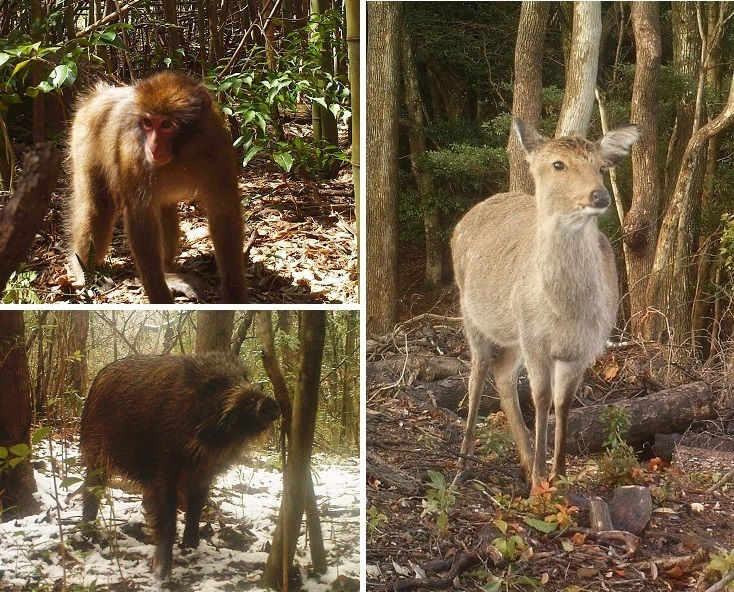
Modernization—deforestation, land reclamation, transformation of satoyama mosaics—pushed wildlife foraging into settled areas, making crop damage by deer, wild boar, and macaques conspicuous. The limits of passive measures (fences, traps, repellents) were quickly recognized, and regions explored active hazingwith dogs.
2.2 Kasuga Shrine’s Deer-Driving Dogs: Preserving a Sacred Realm Without Killing
Under the religious norm of protecting sacred deer, Kasuga Shrine in Nara faced the challenge of mitigating damage without killing. Shudō Sakuzō, an autodidact trainer, prepared a German Shepherd Dog “Otōmaru” that, after roughly ten months of foundational and applied training, could guide herds to designated areas without injury. The program leveraged the GSD’s stock-management capacities(peripheral orbiting, directional pressure) and stimulus control in response to remote cues (Left / Turn / Follow / All right).
Scholarly note: In contemporary behavior analysis this corresponds to targeting, graded distance stimuli, and critical-distance management; the core is guidance by pressure rather than pursuit (manipulating drive/flight zones). Threshold setting matters: over-stimulation → injury risk; under-stimulation → failure to consolidate the herd.
After Otōmaru’s sudden death (distemper), War Minister Araki Sadao donated “Sugimaru” and “Fujimaru.”With the trainer’s departure, however, institutional continuity ceased—revealing dependence on tacit skilland a lack of institutionalization. Had municipalities, shrines/temples, police, and agriculture/forestry authorities standardized hazing-dog protocols across sectors, a regional pest-control playbook might have formed, easing later transitions to monkey-dog programs.
2.3 Managing Ethics and Risk
Deer-driving is a model of non-lethal management, yet risks of counter-attack (goring) and bleeding injuries persist. Training targets: (1) bite-hold suppression (biting as terminal threshold only), (2) control of escape direction (apply pressure toward open ground), (3) instant release on retreat cue (a reliable off-switch). The Otōmaru case shows that herding-type gaze/positioning can minimize herd stress while achieving human management goals (in-park guidance).
3. The War on Rats: Urbanity, the Military, and Public Health
3.1 Three Spheres of Rat Damage
Rat control advanced in parallel across (a) ports/quarantine (plague), (b) urban sanitation (warehouses/markets), and (c) the military (ships/supply). Late-Meiji plague outbreaks mobilized cordons, disinfection, rodenticide distribution, and buy-up programs, alongside rat-buy-up fraud and reputational damage that depressed commerce and fisheries. The organism–pathogen–logistics chain exposed vulnerabilities of the modern city.
3.2 Trench Rat-Catching Dogs: The Functional Elegance of Terriers

In World War I trenches, small working dogs—terriers and pinschers—served as rat-catchers. Their strong prey drive and rapid dispatch yielded higher throughput than cats, which often toyed with prey. Contemporary reports recorded up to seventy rats per day, highlighting contributions to food protection, vector reduction, and soldiers’ sleep.
Scholarly note: Terriers’ size, access to tight spaces, and sustained bite stamina favor rapid turn-around. Handling emphasizes reinforcement by consecutive success—designing the chain “do not eat, do not carry, proceed immediately to the next.”
3.3 Reception in Japan: Inspection, Recommendation—Then Non-Adoption
Japanese military medical/veterinary reports acknowledged effectiveness, but institutionalization costs(equipment, personnel, training) and a horse-centric culture blocked formal adoption. Rodenticides, traps, and hygiene guidance became mainstream. In merchant shipping, factories, warehouses, “animal weapons”—cats, Japanese rat snakes, dogs—were combined; Taiwanese sugar works and farms tried dual-purpose working dogs (GSDs, Airedales, Pointers). Outcomes hinged on alignment of objective, breed, training, and operational responsibility (anecdotes of injury compensation offset by revenue illustrate risk–return calculus).
4. Mapping Breed × Function: Why That Dog?
Breed group | Historical use | Fit for pest control | Main strengths | Main risks/limits |
Herding types (e.g., GSD) | Stock management, guard | Deer driving, herd guidance | Eye pressure, circling; remote-cue acquisition | Over-pressure accidents; inefficient for ratting |
Terriers/Pinschers | Digging, small-pest kill | Rat catching, tight spaces | Throughput; instant dispatch; agility | Suppress “play”; strict sanitation |
Bird dogs (Pointers/Setters) | Search & point | Field surveillance, light hazing | Wide-area search; handler coordination | Must design bite inhibition; poor for ratting |
Japanese native dogs (S/M) | Big-game, watch | Mountain hazing | Vigilance; environmental adaptability | Urban sanitation/non-lethal tasks need careful design |
Training design principles: Behavior chains (approach → positioning → threat → guidance → return); thresholds (flight/counter-attack distances); off-switch (conditioned release); generalization/discrimination(species, time, area); crisis protocols (injury, rotten wood, steep slopes, visitor contact).
5. Institutions, Ethics, Risk
5.1 Religious Sites and Wildlife: Lethal vs Non-Lethal
Kasuga’s program is a rare early attempt to advance non-lethal methods under “protect without killing”norms. Animal welfare and mitigation of agricultural loss were joint goals; dogs functioned as an institutionalized technology sustaining a religious space.
5.2 Sanitation and Discipline: Institutionalizing Rat Control
Rat control bears on public health and military readiness, yet institutionalizing dogs requires trainer development, hygiene protocols, and labor management. Adoption by Army/Navy remained limited; cost-effectiveness and organizational culture decided outcomes. Japan thus favored chemicals/devices, with canine use localized (shipping, factories, colonies).
5.3 Implications for “Wolf Reintroduction”
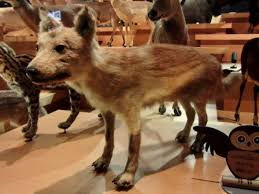
As functional substitutes, reintroduced wolves (wild, non-controllable) and trained dogs (controllable, recallable) differ in manageability. Historically, wolves were ambivalent (benefit/harm), and livestock depredation factored into extirpation. Without social consensus, compensation, and long-term monitoring, reintroduction ≠ solution. Kasuga demonstrates non-lethal management with controllable working dogs.
6. Notes on Sources (Heuristics)
Narratives/periodicals enrich field texture but risk exaggeration; triangulate with administrative and accounting records (compensation, donation ledgers).
Military archives reveal adoption logics (costs, hygiene, culture).
Shrine records (minutes, bulletins) substantiate ritualization, naming, donations.
Veterinary/sanitary-policing history contextualizes plague responses (cordons, disinfection, buy-ups).
7. Conclusion: Dogs as a Platform for Non-Lethal Management

Select breeds/individuals fit for purpose; 2) Design behavior chains and thresholds; 3) Build institutions (trainer pipelines, operational accountability, hygiene, compensation).
Japan historically excelled in individual, skill-based successes but lagged in institutionalization and succession—a weakness contemporary monkey-dog programs help to remedy.
Appendix A: Concise Timeline (Selected)
Late Meiji–Taishō: Rodenticide distribution, buy-ups, port quarantine vs plague.
Taishō–early Shōwa: Kasuga deer-driving dogs (Otōmaru → Sugimaru/Fujimaru): early non-lethalcase.
World War I: Rat-catching dogs institutionalized in European trenches.
Early Shōwa: Chemicals/traps dominate; canine use localized (shipping, factories, Taiwanese farms).
Wartime: Under resource controls, canine military/industrial functions persist in limited form.
Postwar–: Pest management reorganized around hunting associations and municipalities; renewed interest in non-lethal measures (e.g., monkey-dogs).
Appendix B: Operational Skeleton for Canine Pest-Control Tasks
Targeting (species/season/time); 2) Breed/individual selection (drive, resilience, stability);
Behavior chain (approach → positioning → threat → guidance/dispatch → return/release);
Thresholds (flight/counter-attack; immediacy of release); 5) Sanitation & safety (muzzles/PPE, disinfection, bite reports);
Institution (responsibility, records, compensation, local consent, agency liaison);
Evaluation (damage indicators; canine KPIs: success/incident rates).



Comments