

Where Does the Shiba Inu’s Independence Come From?
— A Look Through History, Genetics, and Ethology —
Introduction

When people think of the Shiba Inu, they often imagine a cute face, a spirited attitude, and unwavering loyalty. But among dog enthusiasts worldwide, another trait frequently stands out: independence.
This independence is sometimes misunderstood as “stubbornness.”
In reality, it is far from a flaw.
It is a refined behavioral trait shaped by Japan’s hunting culture, genetic lineage, and canine ethology.
In this article, we explore where the Shiba Inu’s independence originates,
and how this characteristic evolved into one of the breed’s most defining qualities.
⸻
1. A Hunting Heritage That Required Independent Thinking
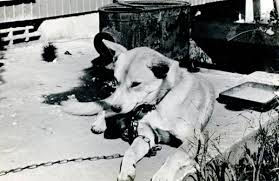
For centuries, Shiba Inus served as hunting dogs in Japan’s mountainous regions.
In areas such as Shinshū (Nagano), Mino (Gifu), and Inaba (Tottori), hunters relied on Shibas to work alone in dense forests where human instructions often could not reach.
Their tasks were:
• Search for game such as small animals and birds
• Assess the situation independently
• Pursue and corner the prey
• Bark to alert the hunter
In short, the breed needed to act on its own judgment.
This historical background explains why modern Shibas often:
• Make decisions before receiving commands
• Adjust their distance according to the situation
• Choose when to engage or withdraw
This is not disobedience — it is a functional legacy from their role as self-reliant hunting dogs.
⸻
2. Genetics: The Shiba Inu as an “Ancient Breed”
Genomic studies reveal that the Shiba Inu belongs to a rare category known as
Ancient Breeds, which also includes Akitas, Chow Chows, and Siberian Huskies.
These breeds were established long before modern selective breeding,
meaning they retain behavior patterns closer to their early ancestors.
As a result, Shibas often show:
• Lower dependence on human direction
• Stronger instinctive decision-making
• High sensitivity to environmental cues
• Excellent danger-avoidance ability
What some call “stubbornness” is actually a sophisticated survival trait preserved through thousands of years.
⸻
3. Ethology: What Makes an Independent Dog?
Animal ethology explains canine behavior as a mixture of genetics, environment, and learning.
A key concept here comes from wolf researcher L. David Mech, who revised the traditional idea of dominance.
Mech found that wolf packs are not ruled by aggressive “alphas,”
but rather by calm, parental leaders who guide the group with stability.
Shibas respond best to this type of leadership:
• calm
• consistent
• confident without aggression
This aligns closely with Cesar Millan’s “calm and assertive energy” approach.
Shibas do not resist leadership — they resist unstable or intrusive energy.
When the human behaves like a steady guide, their independence becomes balanced and harmonious.
⸻
4. The Modern Shiba Inu: Master of Personal Space

Even as companion dogs, Shibas show a remarkable ability to “read the room.”
A typical Shiba will:
• Keep distance when overstimulated
• Approach confidently when seeking affection
• Avoid chaotic or unstable emotions
• Bond deeply with someone who displays calmness
This selective closeness is often described as “Shiba-style affection.”
It reflects a blend of ancient instincts and refined sensitivity —
a unique emotional language that distinguishes them from many modern breeds.
⸻
5. How Socialization Shapes a Healthy Independence

Independence is innate to the Shiba Inu,
but how it manifests depends greatly on experiences during the critical socialization period (8–12 weeks).
Examples:
• Exposure to diverse environments → builds confidence
• Balanced human interaction → reduces unnecessary fear
• Overprotection → prevents proper self-regulation
• Lack of stimulation → increases reactivity
For Shibas, learning healthy distance is one of the most important developmental tasks.
This early education significantly influences whether they grow into confident companions or overly wary individuals.
⸻
Conclusion: Independence as an Expression of Shiba Inu Beauty
The Shiba Inu’s independence is not a behavioral flaw.
It is a refined quality shaped by:
• Japan’s hunting traditions
• Ancient genetic heritage
• Ethological principles of self-reliance
• Sensitive social behaviors
• Early-life experiences
Together, these elements create a breed that is self-reliant, perceptive, and emotionally intelligent.
By understanding the roots of this independence,
owners can appreciate the Shiba Inu not as a difficult dog,
but as a beautifully balanced companion shaped by nature and history.



Comments